The Story of the 60 Most- Endangered Animals and the Increasing Range of Threats Against Them
*Editor’s Note: This was an assignment for Journalism 309: Data Storytelling. I compiled a 61-row/13-column dataset about the 60-most endangered animals and the threats against them. Using Microsoft Word, Microsoft Excel and Tableau, I was able to transform and analyze the data to extract insights that I later used to build my data story around. By doing this project I expanded my data collection and analytic skills, as well as my data interpretation and explanation competency.
The complete dataset and other sources used for this story are available in the Data Biography.
Trigger Warning: Graphic Images
When was the last time you saw an elephant?
A real one, in person.
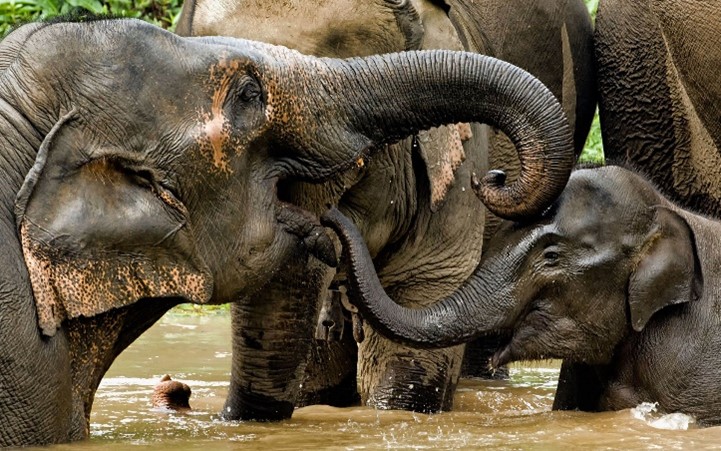
How would you describe an elephant? I’m asking you because the next generation will want to know how you remember them. Elephants will be extinct in the next 20 years, according to recent estimates from Wildlife Conservation Experts. So it’ll be up to you to carry on the legacy of elephants, animals that have been on the planet for 60 million years.
How will you explain an elephant to a child? What about a dolphin? Or a tiger? Or a rhino?
Part One: The List
In the past 50 years, animal populations worldwide have declined by about 70% according to the World Wildlife Fund, the leader in the conservation and sustainability of wildlife. The World Wildlife Fund (WWF) is known for its extensive tracking, protection and defense of endangered species. Specifically, the WWF’s Endangered Animal Classification List, which separates the 60 most-endangered species into three categories: Vulnerable, Endangered and Critically Endangered.
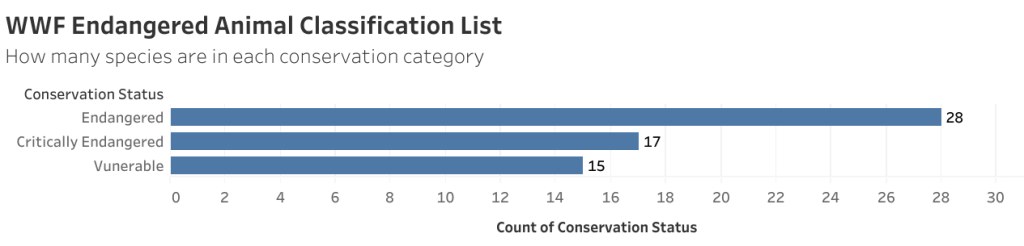
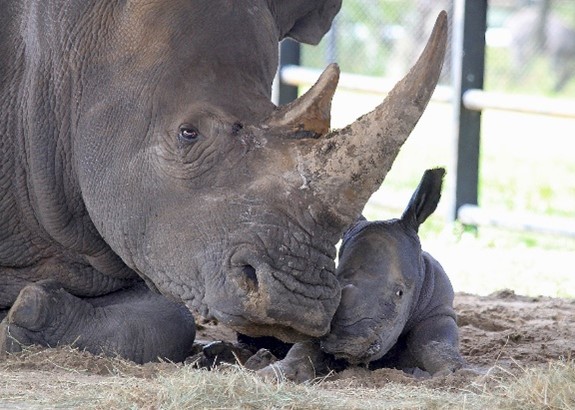
The animals closest to extinction are labeled as “Critically Endangered” and include animals such as the Amur leopard, the Javan rhino and the African forest elephant. These animals are being constantly monitored and are the primary focus of conservation efforts. Without rapid change and extensive human involvement, these species face extinction in the near future.
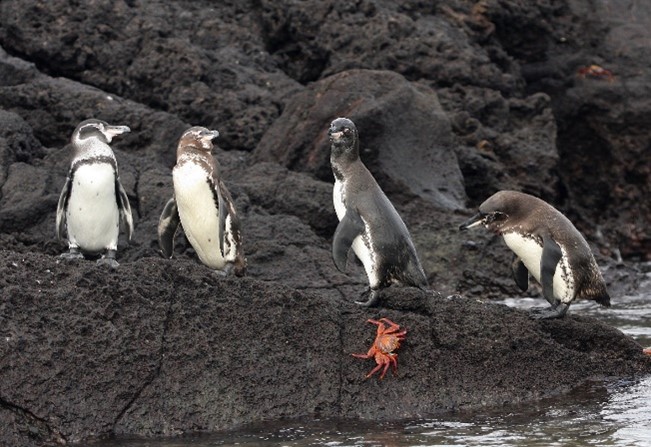
Next are the animals in the “Endangered” category. These animals, such as the blue whale, the Galapagos penguin and the chimpanzee, are experiencing accelerated declining population numbers. In order to avoid higher chances of extinction, these animals must see an increase in preservation on a large scale. For example, many of these animals live in state-funded sanctuaries and rehabilitation facilities aimed at long-term population recovery and restoration.
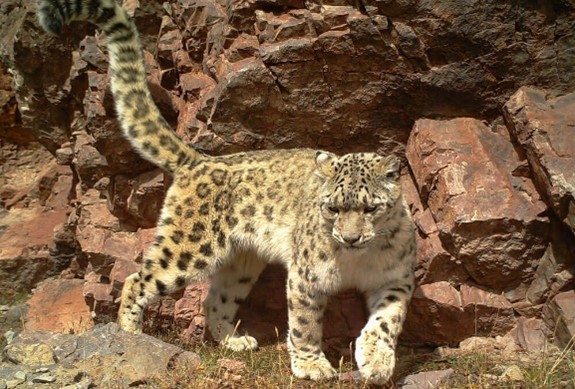
And finally, there are the animals in the “Vulnerable” category, such as the snow leopard and the great white shark. This is the transition stage between animals that need extensive human intervention and animals whose populations are mostly self-sufficient. Animals in this category are largely being monitored for swift changes in population and any abrupt dangers that may develop.
Part Two: The Species
Each animal lives in a unique ecosystem. Ecosystems are complex geographic areas where various components of nature are combined into delicate webs of life made up of flora, fauna, weather and landscape. Each element relies on the others, and upsets in the balance of ecosystems can have dramatic consequences. Each animal tells a different story as to why it belongs in its conservation category.
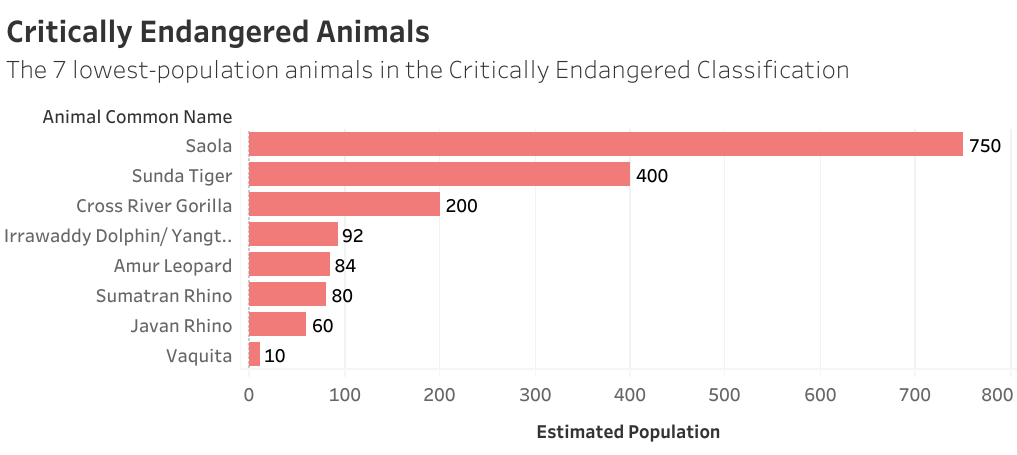
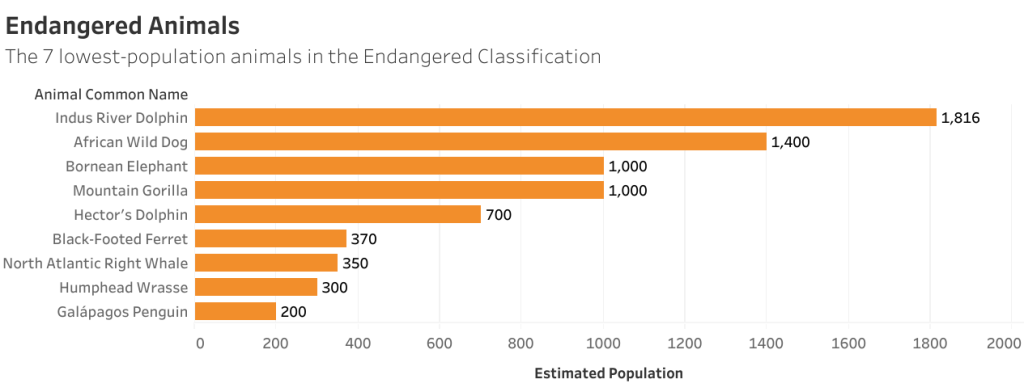
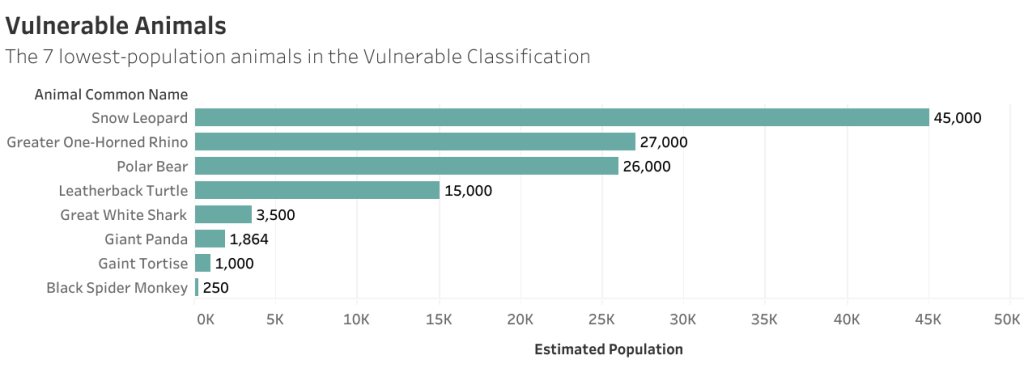
The distinction between these categories isn’t based solely on population. For example, the Sunda tiger is a part of the Critically Endangered classification even though its population is twice the size of the Galapagos Penguin in the Endangered category, and the Black Spider Monkey in the Vulnerable category. This is because the Sunda tiger is losing individuals at a faster rate than either of the other two.
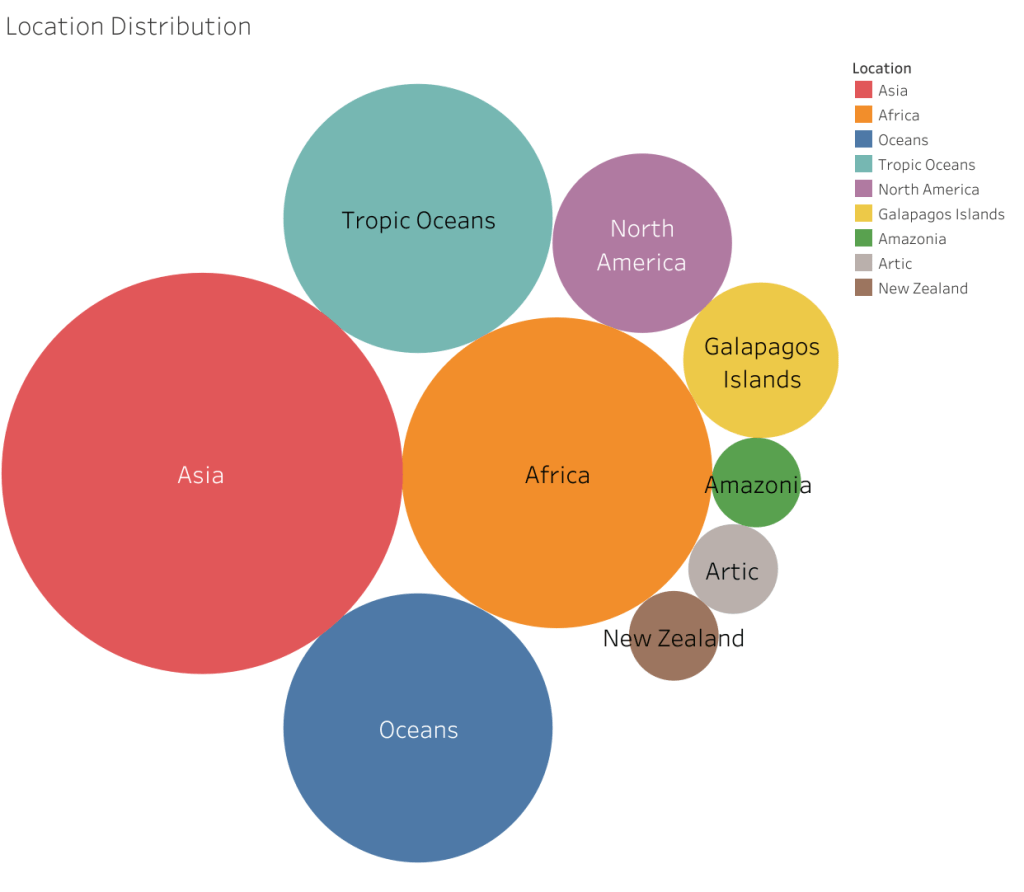
The animals that make up these categories come from all over the world. Threats are not limited to specific locations. In fact, the list represents a proportionate number of animals compared to the home region and its capability for life.
Part Three: The Causes
The World Wildlife Fund’s Endangered Animal Classification list identifies most animals’ primary and secondary threats. By compiling all the data about which threats are the most common, we can begin to narrow in on the specific dangers that cause the most harm. Many threats can affect more than one animal. Additionally, every animal faces more than two threats.
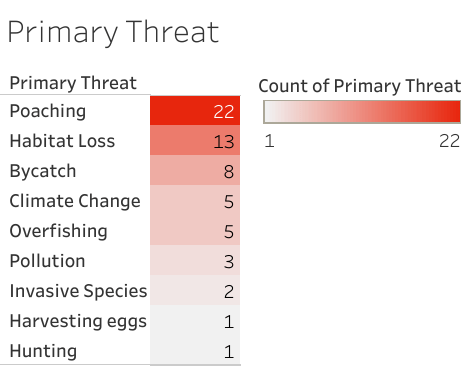
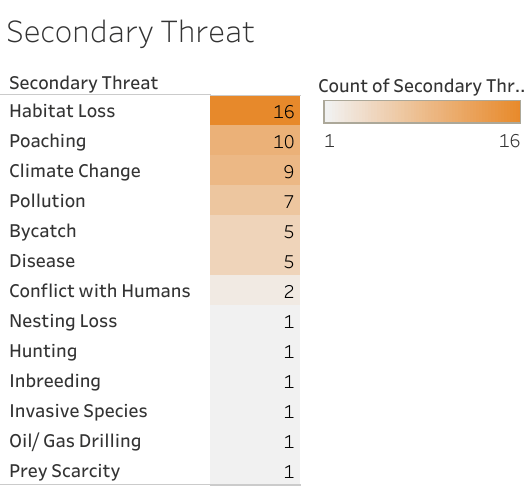
Not all animals face each threat. For example, the loss of nesting ground only happens to turtles. But because nesting grounds are fundamental to the reproductive process, the lack of them means turtles can’t repopulate.
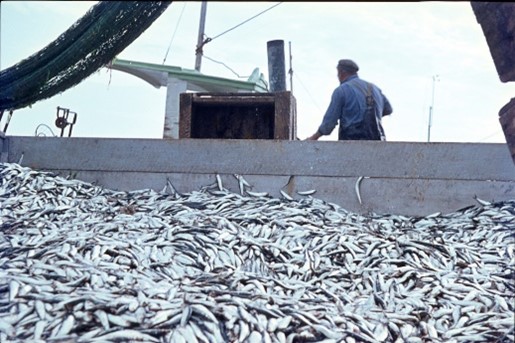
Overfishing is another threat that can only affect a certain type of animal. While it may seem a simple solution to stop fishing for a certain animal, it is not that simple. Thousands of people around the world make their living from fishing, and millions of people rely on fish for protein in their diets.
Poaching is the illegal hunting of animals for black-market trade and is the primary threat to 22 animal species. The animals targeted by poachers are usually killed for body parts. Common examples include the demand for the ivory tusks and horns of elephants and rhinos, the pelts of tigers and leopards and the shells of turtles.
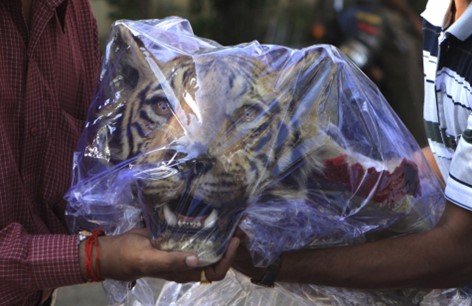
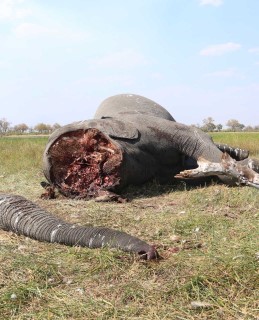
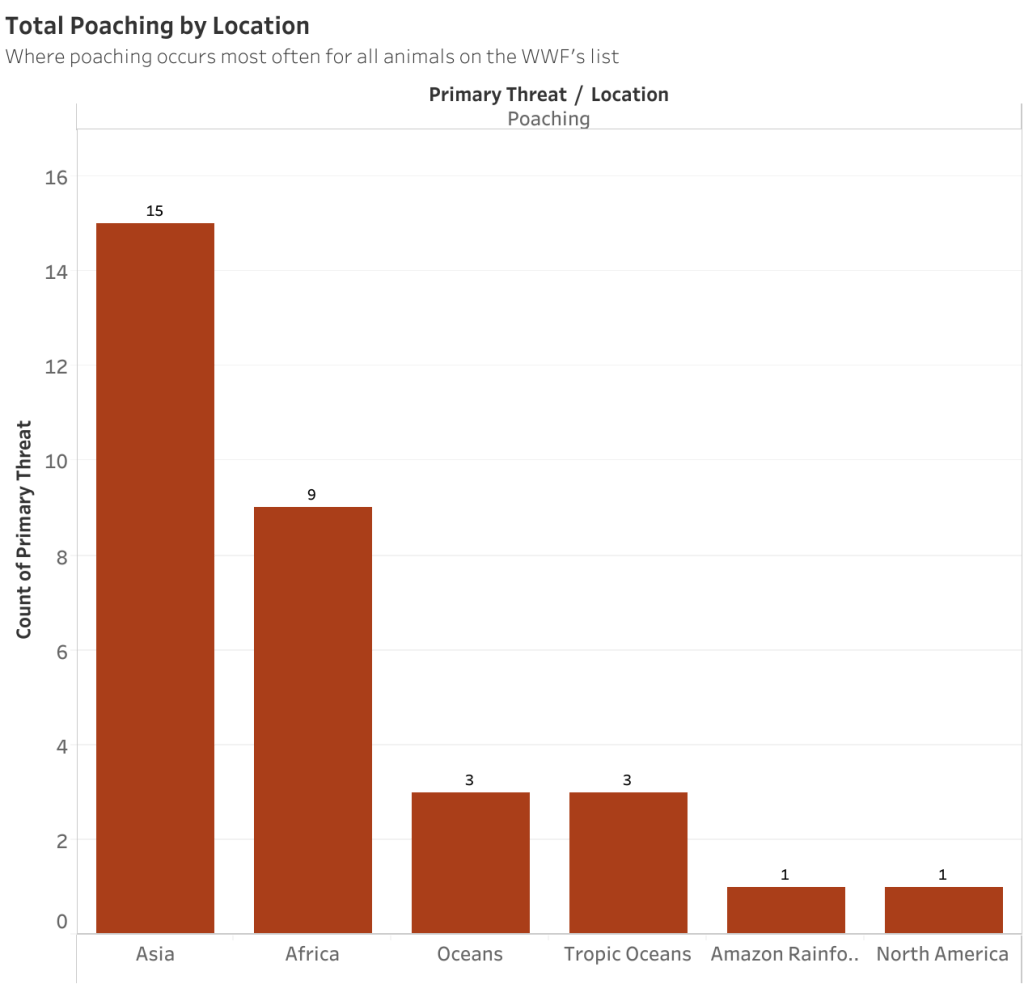
Even though it’s illegal, poaching and the illegal wildlife trade is a multi-billion-dollar industry that’s difficult to stop. Most of the places where poaching occurs most often have historically struggled to take action against the poaching industry. This has recently changed, hopefully with long-term positive impacts.
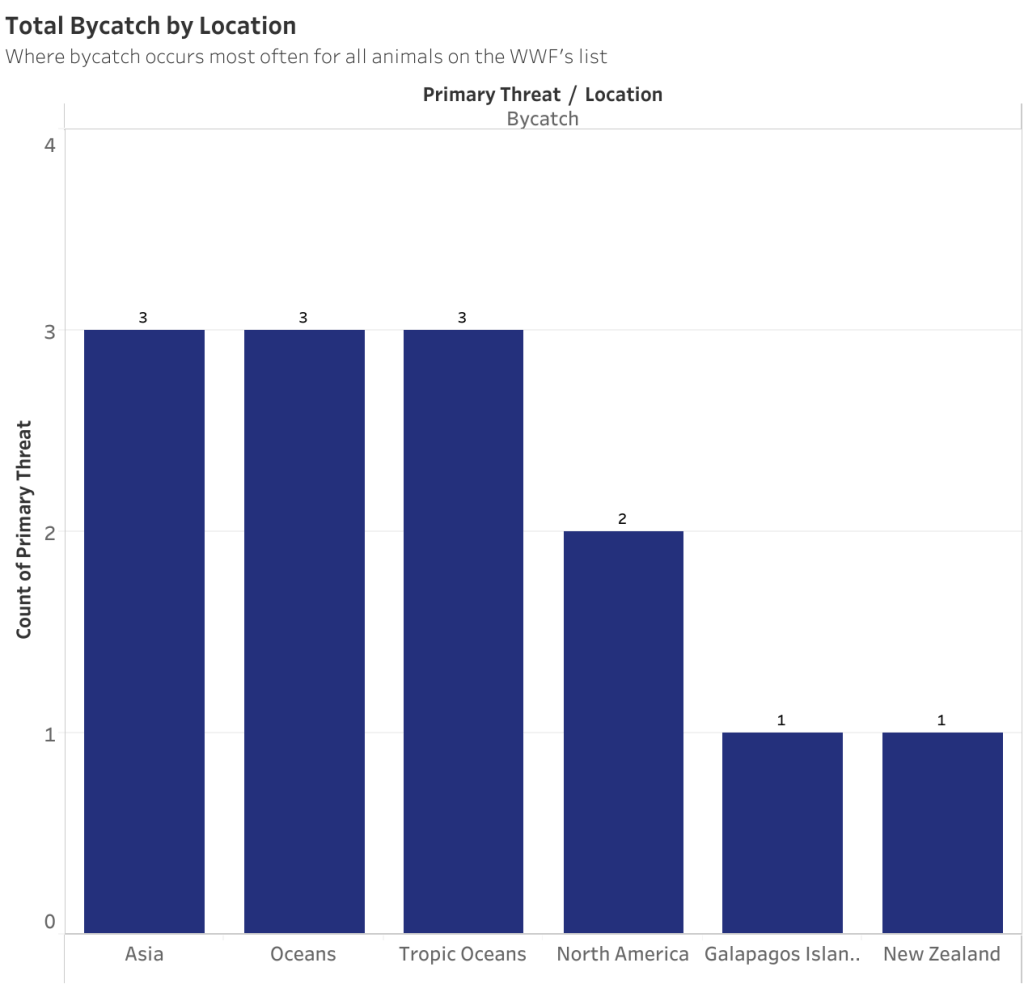
Bycatch is the accidental catching or entanglement of animals in fishing nets and lines. Modern-day fishing techniques are so effective that they are trapping many types of animals that aren’t the desired fish.
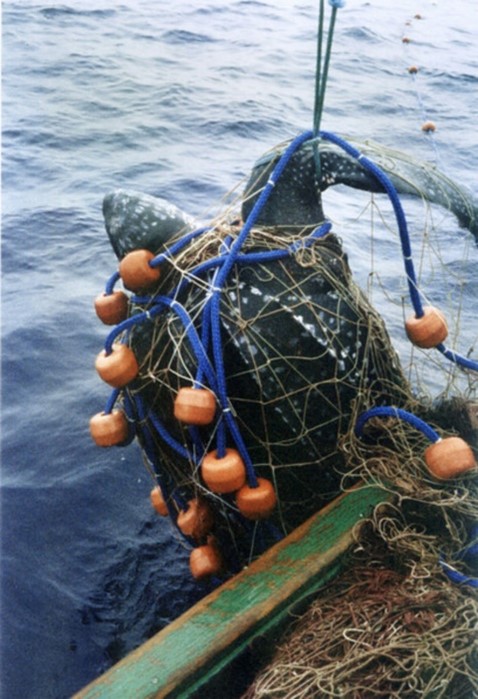
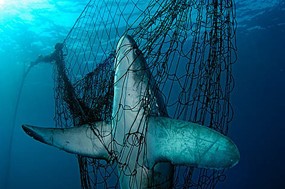
Turtles, dolphins, and whales commonly get tangled in nets and are often left to die by fishermen who haul up their catches. This is such a problem that of the 18 animals on the list that can be affected by bycatch, 72%, or 13 species, suffer from bycatch as their primary or secondary threat.
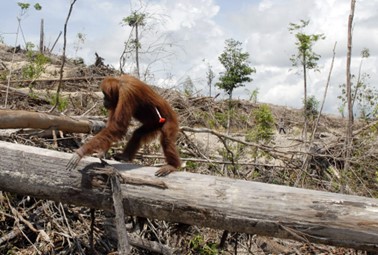
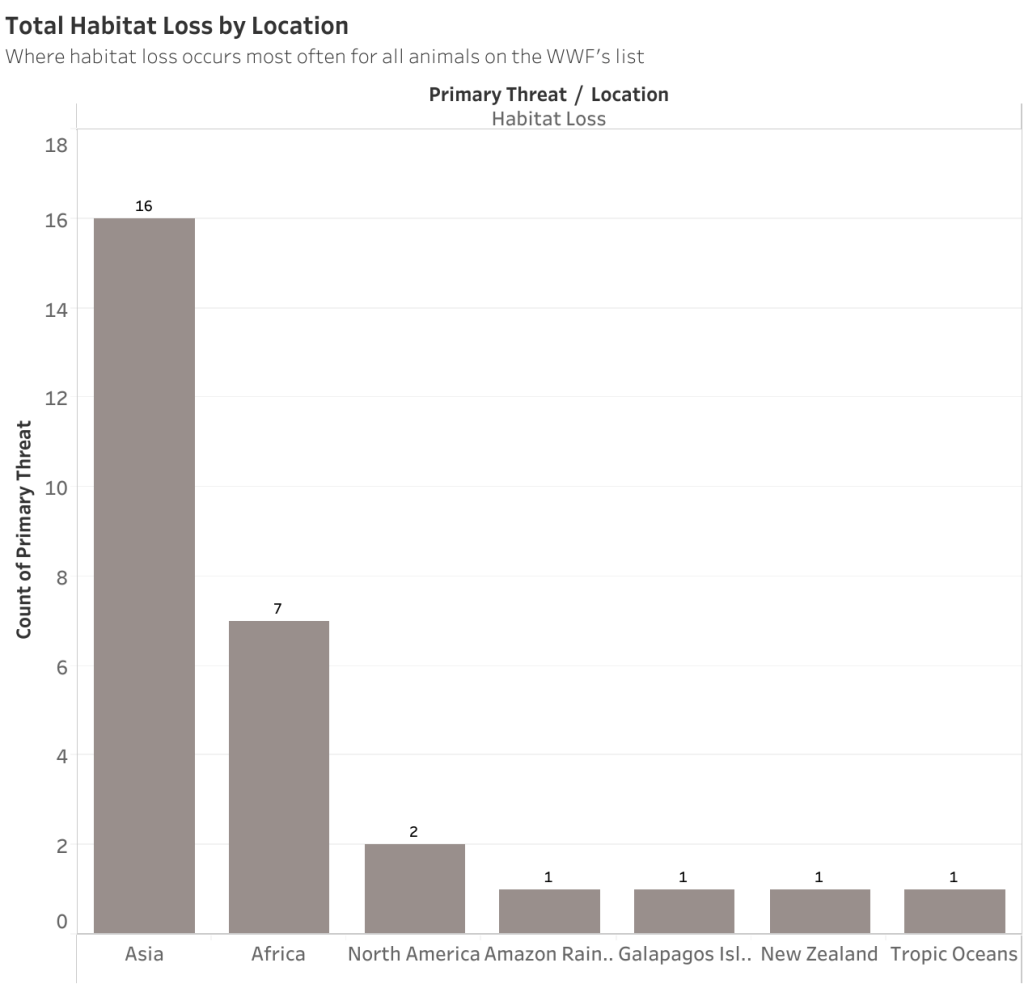
Some threats aren’t direct actions taken against a species; the endangerment is just a side effect of larger forces. For example, habitat loss occurs because of the increased taking of land for human development and expansion.
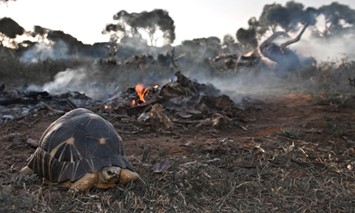
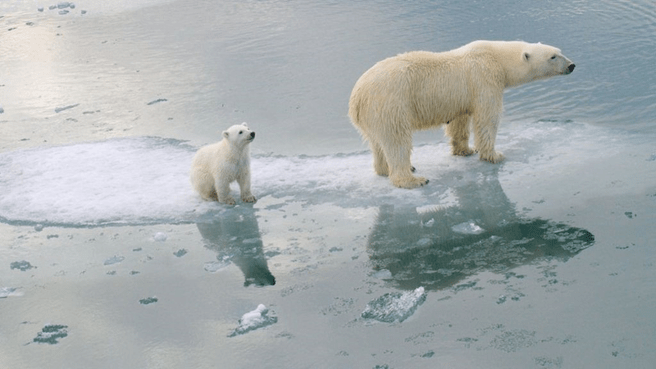
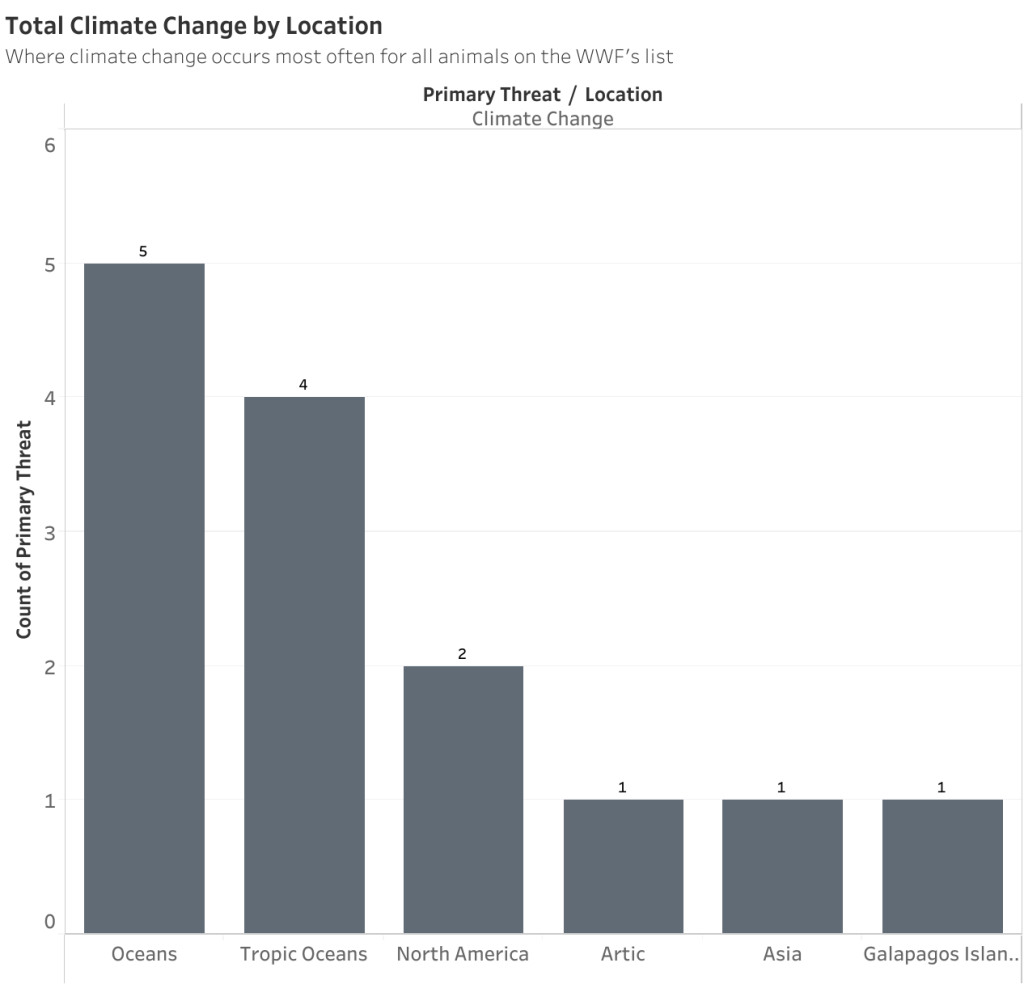
Climate change is also a larger force that affects animals in distinct ways. For example, climate change for polar bears means less habitat and rising temperatures and ocean levels.
However, climate change endangers Monarch Butterflies differently. Butterflies have instinctual cues that trigger migration and reproduction. These cues come from changes in the weather and the environment. Climate change generates extreme weather events that don’t follow annual patterns, putting butterflies in danger.
Part Four: The Solutions
Animals are endangered because of us. We are the preliminary cause of each threat animals face.
But we are capable of change. Historically, when we dedicate appropriate time, resources and energy to a cause we have begun to fix the issues we caused. One of the most well-known examples of this is the giant panda.
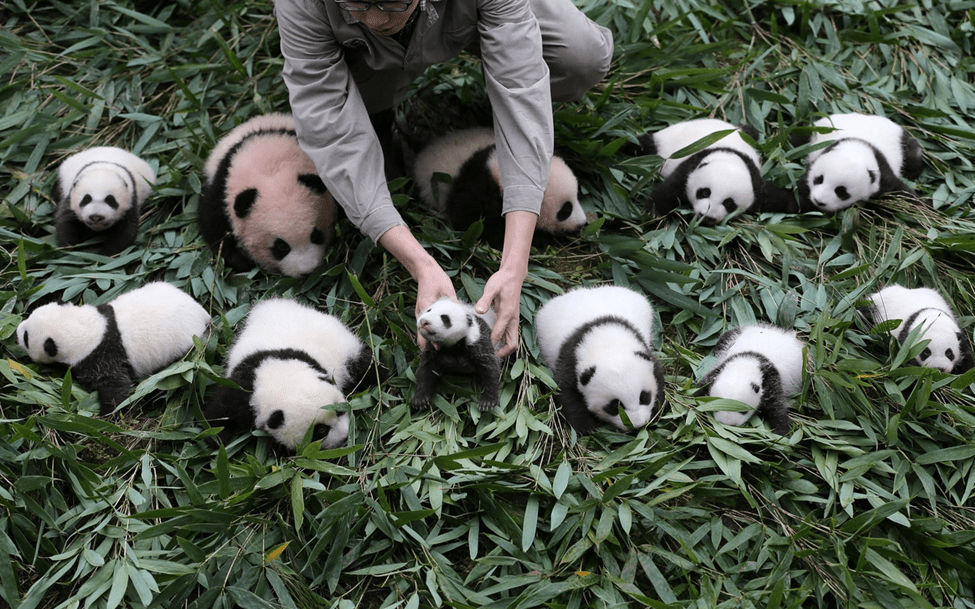
In the last decade, Giant Panda populations have increased by nearly 300 individuals, bringing the total population to an estimated 1,800. These changes came from more land being dedicated for panda habitat, logging bans in the forests where pandas live and large-scale education initiatives that spread awareness about pandas all over the world.
So what can we do to help?
We can make small changes that help contribute to the longevity and long-term sustainability of our planet. Utilizing renewable energy and seeking out local green businesses are a great first step. There is also a ton of value in small actions like limiting electricity and water consumption and the minimization of herbicides and pesticides. But outside of the home, attitudes towards endangered species are a huge factor in their longevity.
We can understand that wild animals should be kept wild. We should never purchase illegally produced goods like ivory, coral, turtle shell and exotic plants and animals. We can educate the people around us about the threats that animals face and reduce the number of plastics and disposable items we use.
While these may seem like small measures, they add up. One less plastic water bottle thrown away is one less water bottle that ends up in the ocean.
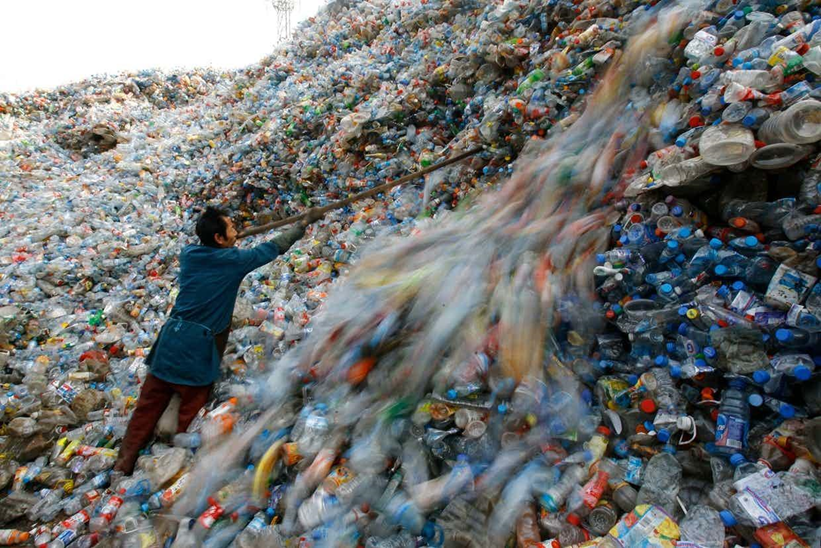
Alternatively, eliminating buying bottled water is even better for the environment. Analysis has shown that bottled water is often the same water as tap water, and sometimes contains additional contaminants tap water doesn’t have at all.
You can also support organizations like the World Wildlife Fund, which helps them develop their work and create larger positive impacts.
Additionally, organizations such as The Nature Conservancy, the Environmental Defense Fund and the Sierra Club Foundation have been champions of the environment, advocating for rapid institutional change and protection of the natural world.

And for the estimated 8.7 million species on Planet Earth, advocates like The Wildlife Conservation Society and the International Union for Conservation of Nature dedicate extensive international networks of knowledge and resources to fight for animal protection.
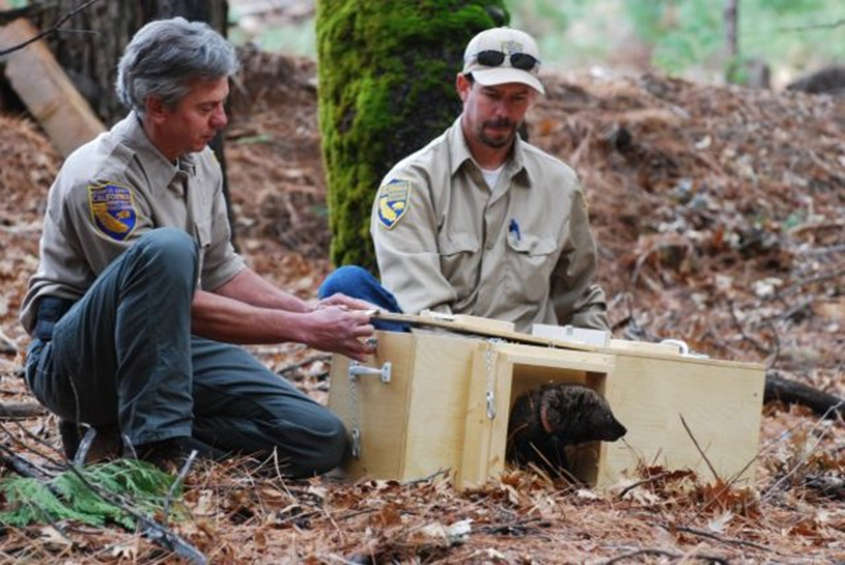
Photo and Caption Credit: Sierra Pacific Industries, 2013
We can make a difference. We can work so future generations can see real elephants, just like we do.
Don’t make your child’s favorite animal an extinct one.
The complete dataset and other sources used for this story are available in the Data Biography.
 The Anthology of a Curio