It’s Real
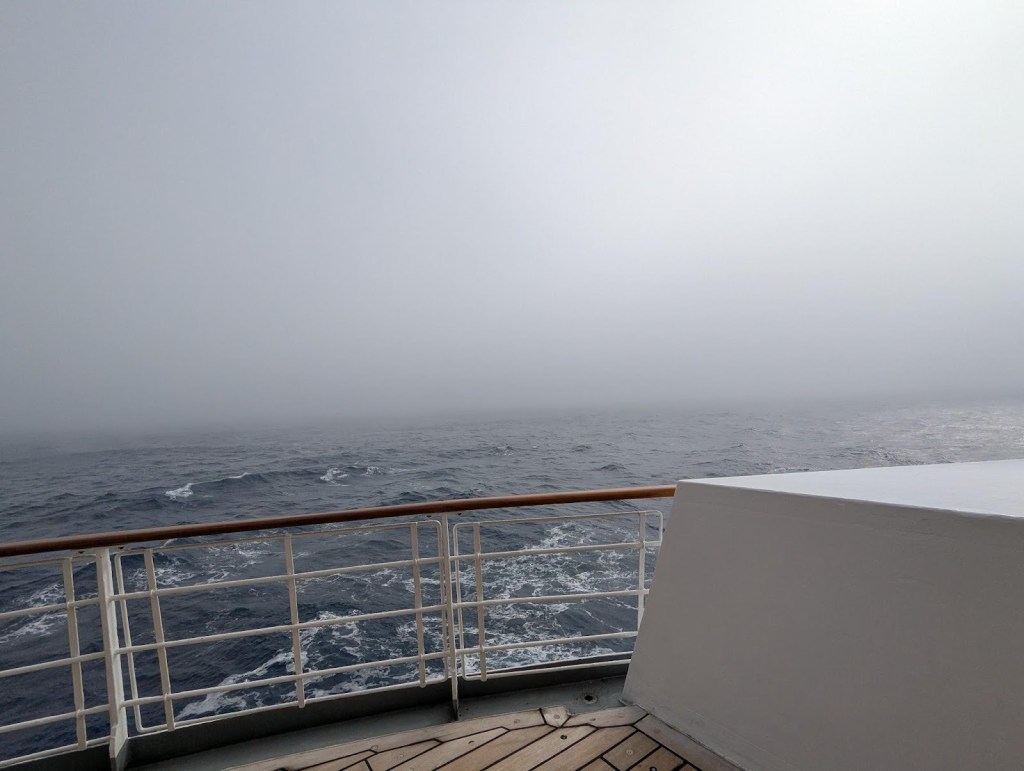
“I’ve never woken up
and not seen land before,”
8,634 days I’ve been alive, and I’m lucky enough to get to do something entirely new.
The novelty of “first” overtakes my heart. Everything my days have ever been filled with or shaped by isn’t the standard anymore. It is a one-of-a-kind, brand-new experience. How rare is that? How privileged I am to gain that perspective on the other side of the world? And how many people will never have that “first”?
I’d never considered it. Not seeing land. Not being anywhere close to land. For a landlocked lady who loves her alpine lakes and midwestern rivers, the ocean on its own is completely anomalous.
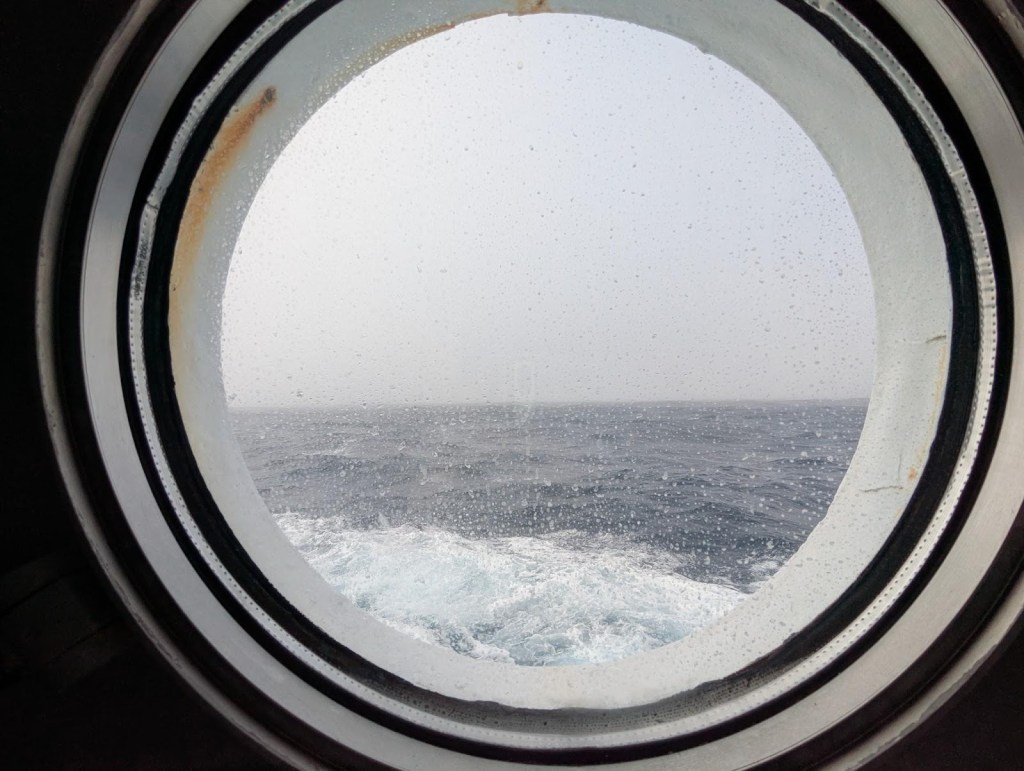
Wednesday, February 18th, 2026, was the first landless day of my life.
Just the ocean. And us.
Well, the ocean, and us, and the infamously rough sailing route: The Drake Passage. Named for the chart-topping R&B artist (just kidding, it’s named after Francis Drake, the first European recognized to sail and document the passage, NOT the first to “find it”), the Drake Passage is grey. The sky, the sea, all grey. Waves and clouds are mirror images, the only discrepancy being the surface water launching off the tops of waves. Outside, all is grey. And inside, so are some of the passengers’ faces.
What was the Drake Passage like?
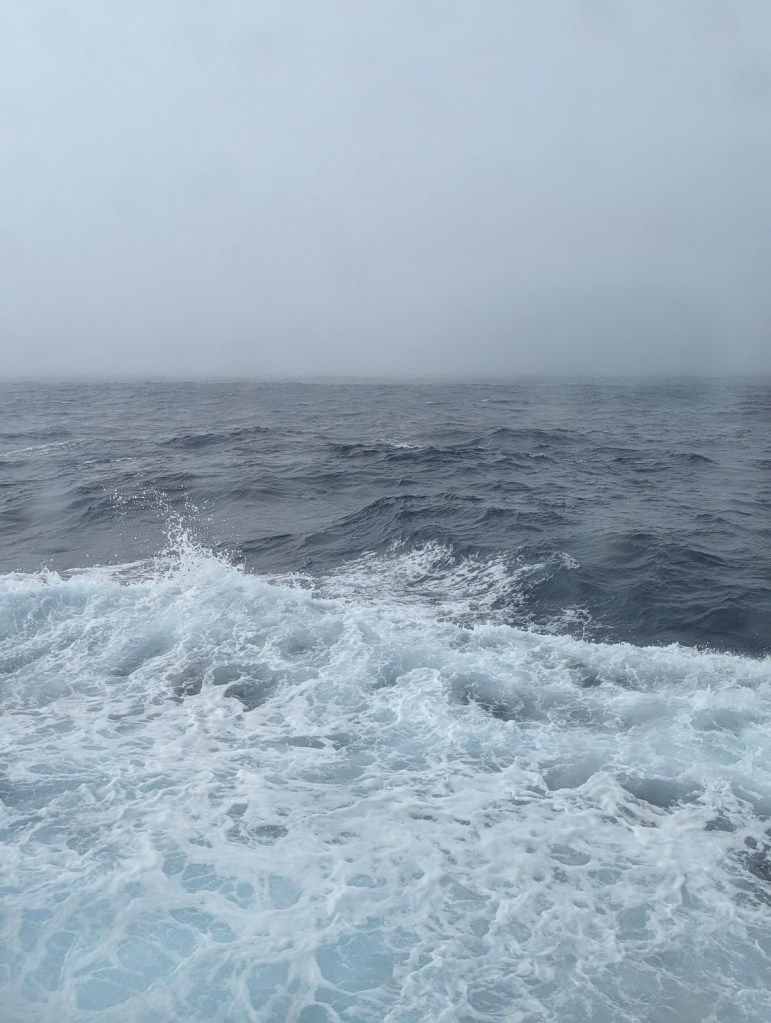
Churning, tossing, rocking, being thrown out of chairs onto the floor, and tables toppling when big waves hit just right.
- We learn we’re “incredibly lucky” in our passage across the sea because our swell height peaked at 4.2 meters, or about 13ft, at its highest… but apparently that’s small and not even close to our server, Manny’s, personal worst at 10 meters…
- The boat and people are shaken like a homemade Italian dressing
- Waves reactivate the childlike rolling feeling of somersaults down a hill
- It’s like the drop in your stomach when your plane descends too fast
- Consistently, there are sudden, sharp shocks just like a bottom-shelf liquor shot… and the instant reaction of discomfort flooding your body
Lying on your back in bed only means being rolled onto your side by the next wave. We learned it’s easier just to let the ocean roll you into your sleeping position, and to ignore the crashing noises of the hull against powerful, unstoppable waves. We’re not sinking; we’re sailing- I think….
We see a rainbow:
The morning dawned. The land was gone. We hadn’t sailed off the edge of the world just yet. Stumbling into this new reality, we searched the ship for the beginning of life- breakfast- and sat in stunned, still silence, spellbound to the sea. And then, the grey began to fade. Soon it was gone. In its place, a massive rainbow expanded, elongated in the uninterrupted sky.
I’ve seen hundreds of rainbows in my life. They’re nostalgic reminders of color, life’s vividities, and magic. One of the only sights that will steal a few seconds of attention from nearly everyone, it’s a captivating, beautiful, natural phenomenon.
One of the crew tells us they’re rare and a good omen. Someone else wonders if rainbows are very likely or unlikely in an environment that is nearly always rainy and grey.
I still remember the roll of the ship, the drops of my tea spilling over the edge of my cup, the fork sliding to the other side of the table; reactive events that drew no reaction from me.
I wasn’t listening. I was fully entranced by the rainbow. I’ve never seen a rainbow like that before. I don’t think it’s an exaggeration to say I’ll never see one like it again. For I was fixed on the sky, desperately trying to trap that image in my mind’s eye. I hope I never forget it.
The ocean, a foreign concept:
70% of our planet is ocean, and I’ve only ever explored the oceans in the places where the land meets the water. Once, I was 60ft underwater, swimming next to gorgeous sea turtles and counting baby octopi. Another time, I was 6,000 feet in the air, paragliding across the lush Turkish coastline, gaining the attention of all the nearby sea birds, who squawked and stared at me. But upon landing, upon resurfacing, it’s just the air and the land that matter. Not the sea.
Perhaps that curiosity is what drew us to the portholes in our cabin later that day. What does the ocean actually look like? How does the ocean move?
The movement of the waves against our ship never occurred the same way twice, similar to how a snowflake’s pattern is never repeated. I was checking, unable to pull myself away from the waves. My true visionary friend and fellow expeditionist, Erin, was lost in a similar trance.
There we were. In the cheapest cabin, on the lowest deck, at waveline. Our window to the world is two portholes, no bigger than 1.5ft across. Windows that gift me the best view I’ve ever seen.
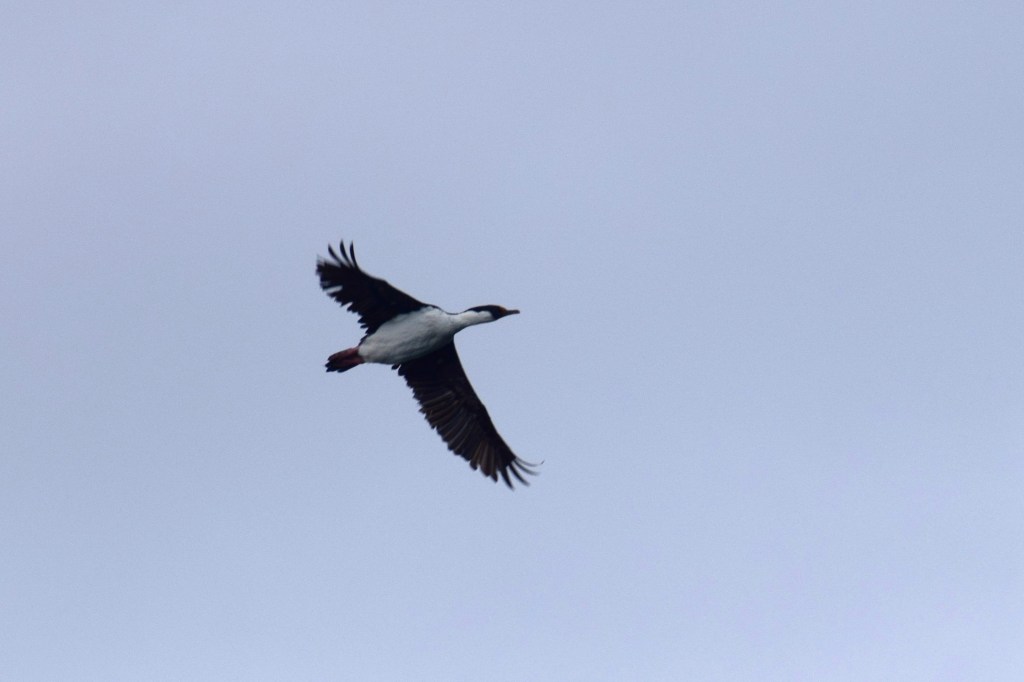
The boat is still rocking as we sail; waves occasionally cover our window, often enough to rotate us to face the sky as we rise and fall with the ocean. Rolling on the sea turns to looking at the sky. Sky, roll, sea, roll, sky, roll, sea, roll. (And the occasional bird.) The rainbow’s good omen sets the stage for a day of magic, and the show we’ve been given so far is inexplicably fascinating.
Looking back, it felt like forever. Like a dream that doesn’t die when your eyes open. Like a special moment protected and immortal in the back of your heart. An entire, singular, eternity. A beautiful eternity, but not nearly enough time to memorise how it feels. Sky, sea, sky, sea. Unexplored, exotic, something truly and profoundly new. An immense understanding of “never-been-done-before”.
Suddenly, there’s a flash:
A flash of black and white.
Boom!
Like the jack-in-the-box or the mole you whack, it suddenly pops up again. In an instinctive act, born of six years of friendship, Erin and I, panicky and silently, turn to find our cameras. The following chaos goes like this:
- I trip over the corner of a bed
- Erin’s phone spills off a blanket onto the floor
- I struggle and fiddle with the dresser door’s magnets (spoiler alert: never to be truly figured out during this voyage)
- Erin’s phone goes sliding across the room when a wave rocks us over
- The safe’s door on the top shelf just misses my head when the doors open
- Attempts to avoid the random objects strewn around the room end in little success (I lose a sock)
- I’m squeezing through the narrow corners and nearly land face-first on the corner of the desk when the ocean moves, again… (it took me too long to learn a boat always rocks, sorryyyyy I’m from boat-less Colorado)
- Then, back at the widows without being seriously injured: Ready
- Wait, wait…. still waiting… don’t wave-r focus…..
There! Black, white, curved fins, tail? What is it? Even though we both mastered animal identification in preschool, we were surrounded by cows and chickens… this is literally a different world, and I’m stumped. What I suddenly do understand is the age-old, “It’s a bird, it’s a plane, it’s Superman!” I know ocean creatures and superheroes have their differences, but I’ll admit it’s been a long time since I didn’t understand what was occurring in front of me. What are they?
And then they crest above the waves.
Dolphins. Three of them.
She takes videos, and I go for pictures, as a secondary act of unspoken, slightly smug friendship instincts.
We haven’t filled the room with words. They’re useless. It just looked unbelievable. Staged, fake, something you only ever see from the other side of a screen, not the other side of a window.
Three dolphins, no more than 60 yards away from our portholes. Diving in and out of the waves, over and under, they play in the wake from the bow of our ship. Jumping into the sky, their black-and-white color pattern vivid against the grey of the world. Fading in and out among the crests and falls of the waves, seamlessly, like they know everything about how this singular wave will move. Elegant, beautiful. And also crazy.
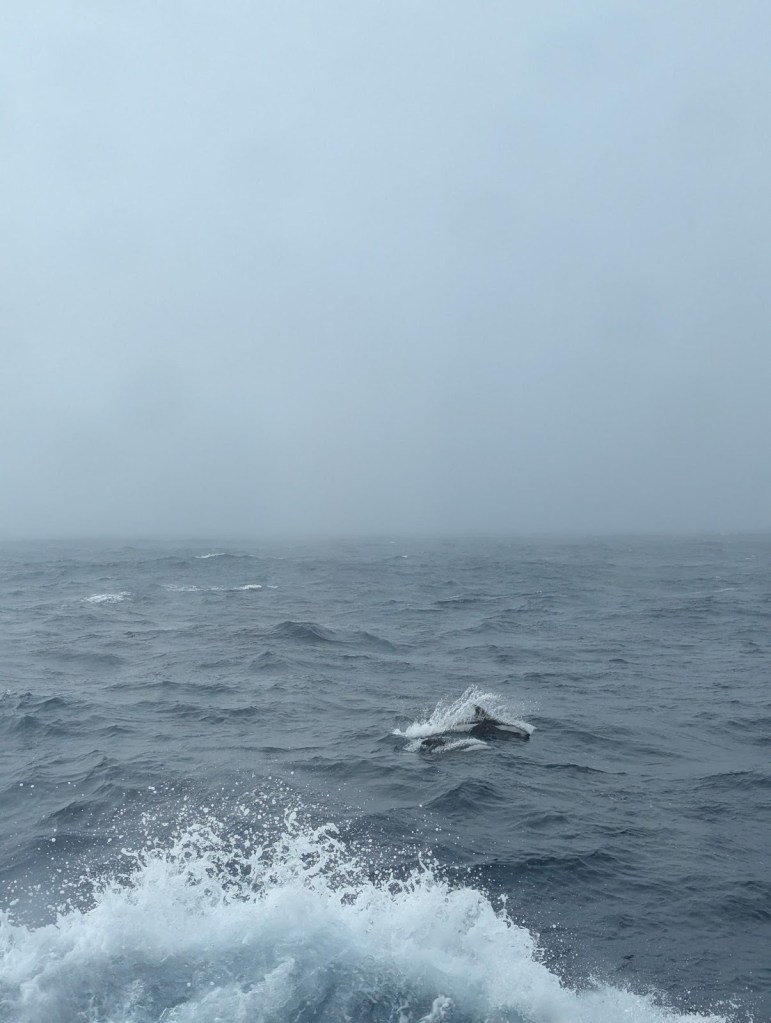
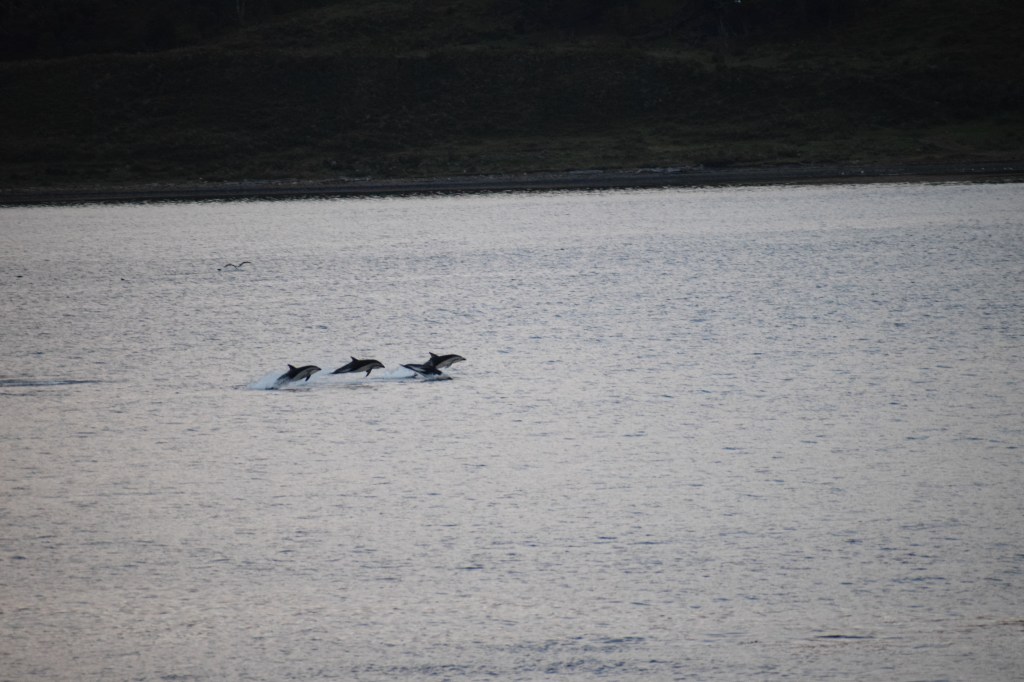
Over a day’s sail from the Beagle Channel, where the dolphins call home, it’s special just to see them at all, somewhere out in the open ocean.
Of all the fin joints in all the world…
Maybe that’s one of the reasons why ocean life is so captivating. It’s there- and then gone. One moment, there’s nothing but vast, empty ocean- the next, there’s something remarkable: survival in a way so different from our own. I’ll admit I was bewildered. The old sailor stories of mythic creatures in the deep sea and cryptic warnings about the ocean’s haunting magic are suddenly more real to me than ever before. The curiosity and the shock, yes. But it’s the absolute confusion in the fact that the world, suddenly, is not what it was before.
My conditioned understanding of humanity’s illusion of superiority started to shatter in those seconds. This would only continue…
The instant the dolphins slip beneath the waves for good, there’s only silence. Then the silence is broken by the sounds of elation and awe. And then, unstoppable action
- Watching, reacting, sharing pictures and videos
- Rummaging through piles of papers that are, for the moment, invaluable in the attempt to decrypt our Antarctic animal field guide and the symbols it’s trying to teach us
- Shouting strange phrases at the irritating multiplicity of animals with a similar black-and-white pattern
(Spoiler alert: We don’t know sh*t about dolphins.) What little I do know comes- almost exclusively- from the movie about the dolphin missing a tail.
We’re laughing at the absurdity of what we saw, cackling over the unspoken reactions we shared when we first saw them. It’s hard not to return to that one moment, when the tip of the black nose broke the surface for the first time… just wow. Words still aren’t enough.
From absolutely unbelievable to undeniably real:
Later that day, we tracked down Julia, our expedition staff Marine Mammal Expert. For Julia, she chased her passion to the sea, intent on outweighing other accomplishments on the continents. The call of the ocean was too strong, and she’s never looked back. (Also, is the call of the ocean contagious, because I’ve been noticing some new ocean-ish wishes?) It’s a sentiment shared by most of our expedition team. Feeling stuck, following their desires to learn and engage with the natural world, and the utter lack of regret for doing so. I digress, but the passion they all share is electrifying.
Julia was walking through the Deck 5 lounge, which would later become our favorite place on the ship (and NOT just because of the unlimited free 24/7 coffee and tea, and the bar with a daily $7 cocktail deal). We caught her by shouting, admittedly, louder than we needed to, but it all spilled out. Like middle schoolers talking about rumors and gossip, and American presidential candidates during televised debates: jumping around, speaking over each other, passionate and a little confused.
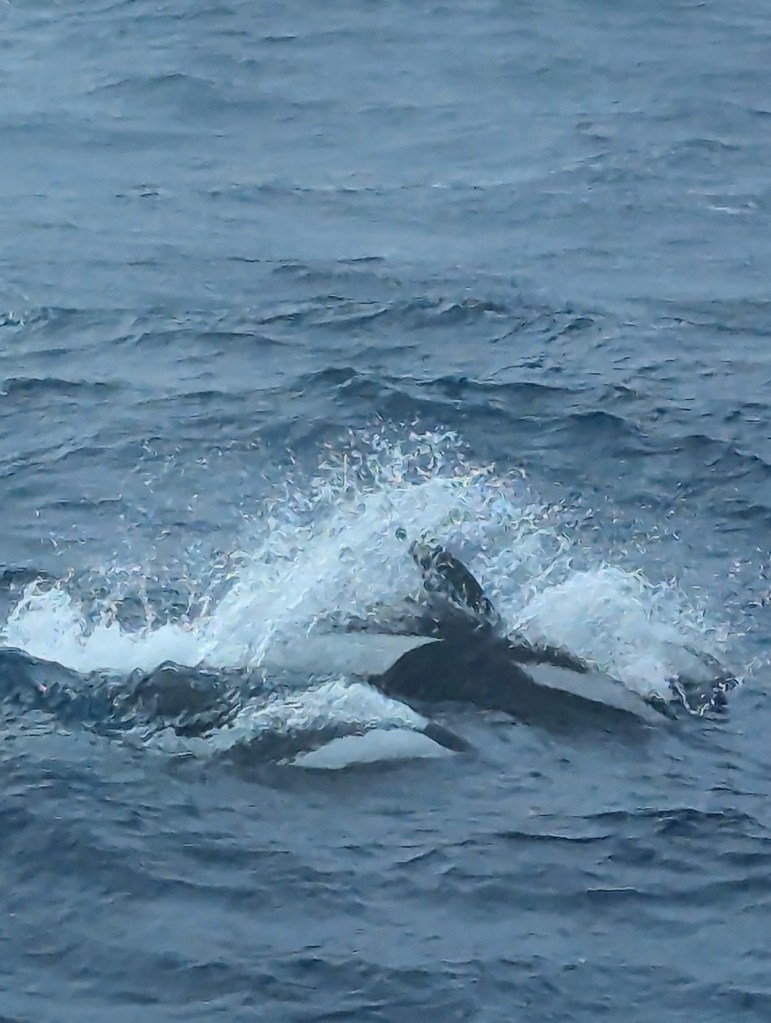
Earlier, we hypothesized we’d seen a type of dolphin called Lagenorhynchus Criciger (and if you skipped over that name because Latin, no offense taken; it took me five minutes to spell that correctly). They’re more commonly known as Hourglass Dolphins.
We showed Julia the pictures and talked about various whale species and their distinctive fins, and Julia’s confirmation that we had indeed seen hourglass dolphins blew my mind. We sought information on porpoise, and it changed everything. We had gotten it right, matched pictures and guessed a little, but it worked in school, and we’re glad it worked in the real world, too.
Some part of us had hoped we were wrong and they weren’t dolphins- but orcas- yet in spite of that, hourglass dolphins are still really killer whales, and it was whale-y awesome to learn about them.
For me, I think that’s when the reality of the moment sank in. These are real, dynamic, incredible creatures. They are wild animals.
Julia asked one simple question:
“What time was this?”
That’s when the validity and rarity of that first moment were exposed.
For it was this question that revealed the timestamp of our photos was special. The entire crew and expedition team are the people who spot the most animals, most accurately. But they were in the midst of their daily meeting, meaning they weren’t looking. We were.
And then, no one else on the ship reported a similar sighting during the entirety of our voyage. For two young adventurers, likely the only humans to see these three dolphins, in that moment and on that ship heading to Antarctica at age 24, is remarkable. The part of my mind that’s consumed by the forgotten continent at the bottom of the world is first populated by these incredible creatures. They were the first thing that made the trip feel real.
Day 1 on the open ocean: The obliteration of my fallacious pre-trip expectations:
I’ve always been afraid of people without passion, because I know I could never live my life without one. Seeing how much passion the people around us (passengers and crew alike) have for even the smallest, fleeting moments of wonder is infectious. 150 passengers, from all over the world, and there’s one thing that we all truly had in common.
A shared sense of “this matters.”
You can’t embark on a trip across the ocean to Antarctica without feeling that it matters.
That it’s important.
And that kind of commonality is rare bridge bewtween people, peacemaking and powerful.
Expectations are a waste of time. Because in Antarctica, at least how I understood it, the place is the thing. Antarctica itself is the goal. The destination, the achievable. The boot on the shore, the snowglare in your eye, the cold wind on your cheeks. It’s the intertwining of your existence with this alien place to prove it exists. To be a part of a millennium-long story that’s bigger than yourself.
Everything else- the fish, birds, whales, good weather, bad weather, seal or penguin- is extra. Lucky, incredible, and unpromised. The only guarantee is in the guarantee to try. No promises, no expectations, because they just won’t compare. No expectation will ever do Antarctica and its journey justice, because you’re setting out for an expedition that’s never happened before and will never happen again.
Antarctica is too dramatic and too dynamic to give you the same experience twice.
The magic, staring out the porthole, the pride in being the only people to encounter these moments. Grateful to the alchemy of the universe for setting up everything for that one moment to occur; this is what really makes that moment valuable for me. If we had been promised or expecting dolphins, it wouldn’t mean as much. The hell of a shock when the unexpected happens anyway is worth the wait.
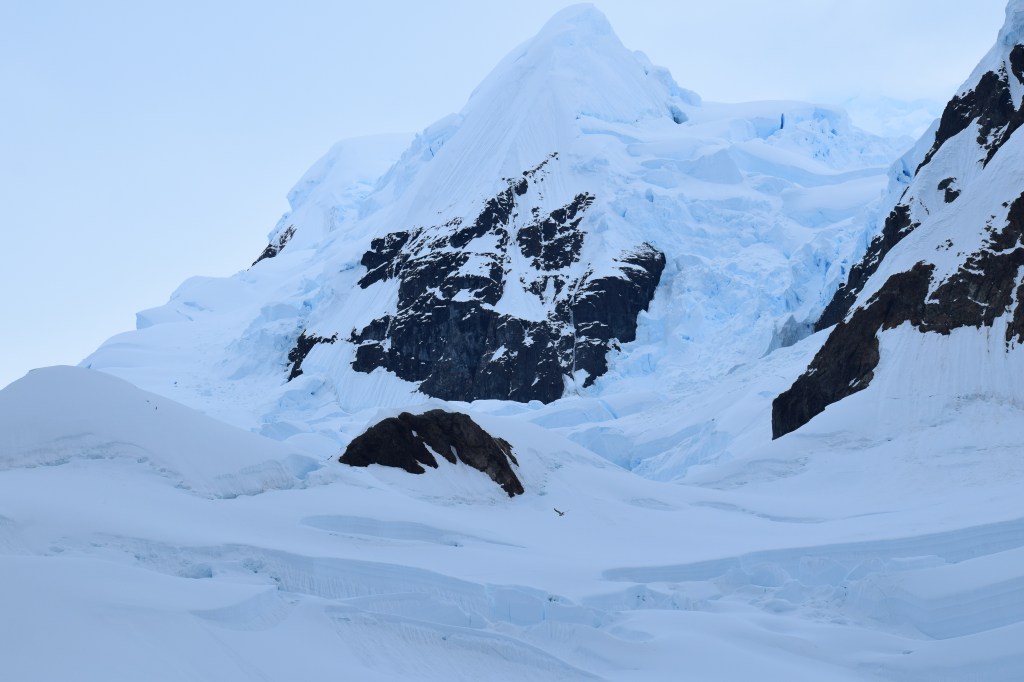
Antarctica
is
real.
A phrase offering images of
penguin huddles in a blizzard,
or dramatic cliff drops,
lost and forgotten sunken ships:
The known legends of the land.
These dolphins, though? They’re mine and Erin’s to share. They’re ours. (Sorry, you can’t have them.) They are the shifting understanding of what we’re undertaking. What’s possible.
The next thought that would come to infect my mind was, “What have I gotten myself into?”
And then there’s the bold, unflinching, raw sense of real:
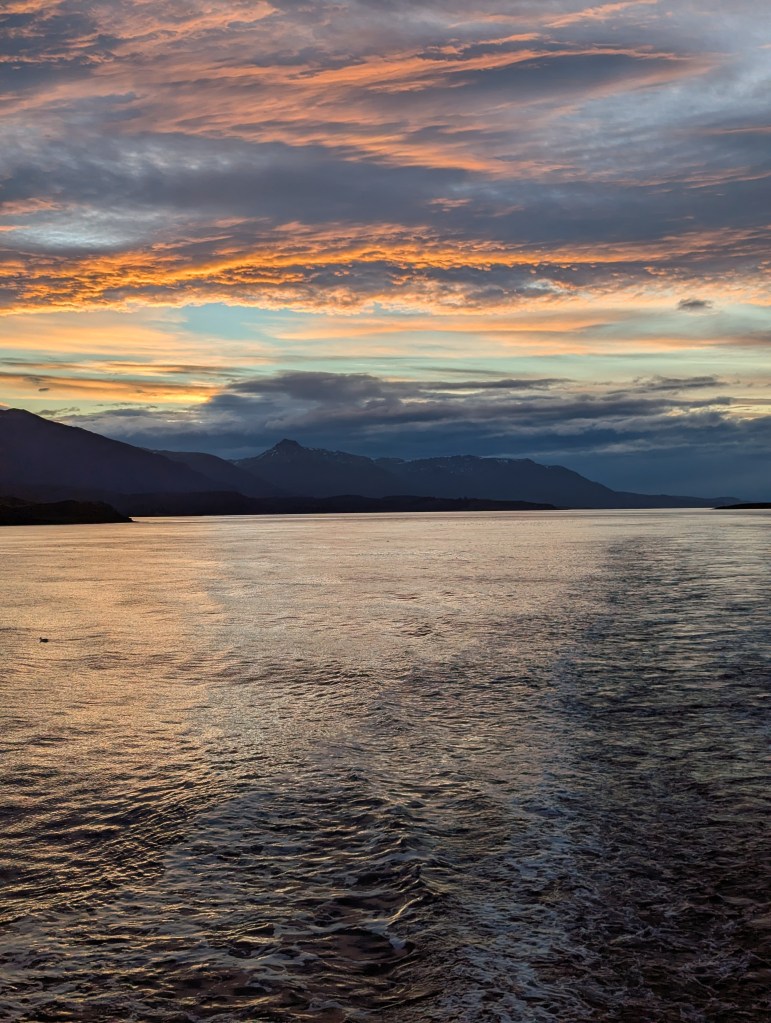
I seem to have forgotten how good and powerful a deep sense of being real, and seeing real, is.
I’m sorry I forgot.
I don’t want to forget what that feels like. It’s without parallel. It’s real and alive, and those moments of life are extraordinary.
“I’ve never woken up and not seen land before,” I wrote. “I’m curious, excited, energetic, and I feel alive. There are things that echo stress and tension, but echoes are all they are. The noise fades with distance and time. The things I can’t control don’t control me here. Travel is very rarely easy, so I find immense peace in the small moments.“
Then, I closed my journal, turned out the light, and let the peace found in the ocean’s rocking put me to sleep once more, longing for the adventure that’d continue in the morning.

